


The Berlin Apartment is a first-person, story-driven adventure–more like a walking simulator/interactive narrative than a traditional “game.” At its core, you move through a single apartment that, over the course of the game, transforms to reflect different eras of Berlin’s dramatic history.
As you explore, you find “relics” — these could be hidden objects, letters, furniture, personal items — that trigger short vignette-style stories of the apartment's former inhabitants.
Each vignette plays out differently: You could be folding paper airplanes, packing a suitcase or hanging makeshift Christmas decorations–each chapter/era has a distinct atmosphere.
In The Berlin Apartment you witness and play as the several of its inhabitants over the course of nearly a hundred years, including those when the apartment overlooked the Berlin wall that divided West from East.
7 year-old Dilara goes to work one day with her father Malik, who is refurbishing the apartment. Dilara's childlike curiosity sees her investigate the apartment, digging deeper and deeper into its history by finding relics of its past and hidden souvenirs secreted by previous tenants.

Kolja and Lu feature in the 1989 instalment. Mirca, Kolja's flatmate left and a miserable Kolja needed a lift, he gets it from his goldfish Erich (who sounds a lot like Klaus from American Dad), and Lu, a girl who lives on the Western side of the Berlin wall. Kolja and Lu form an unlikely relationship via messages carried on paper planes!
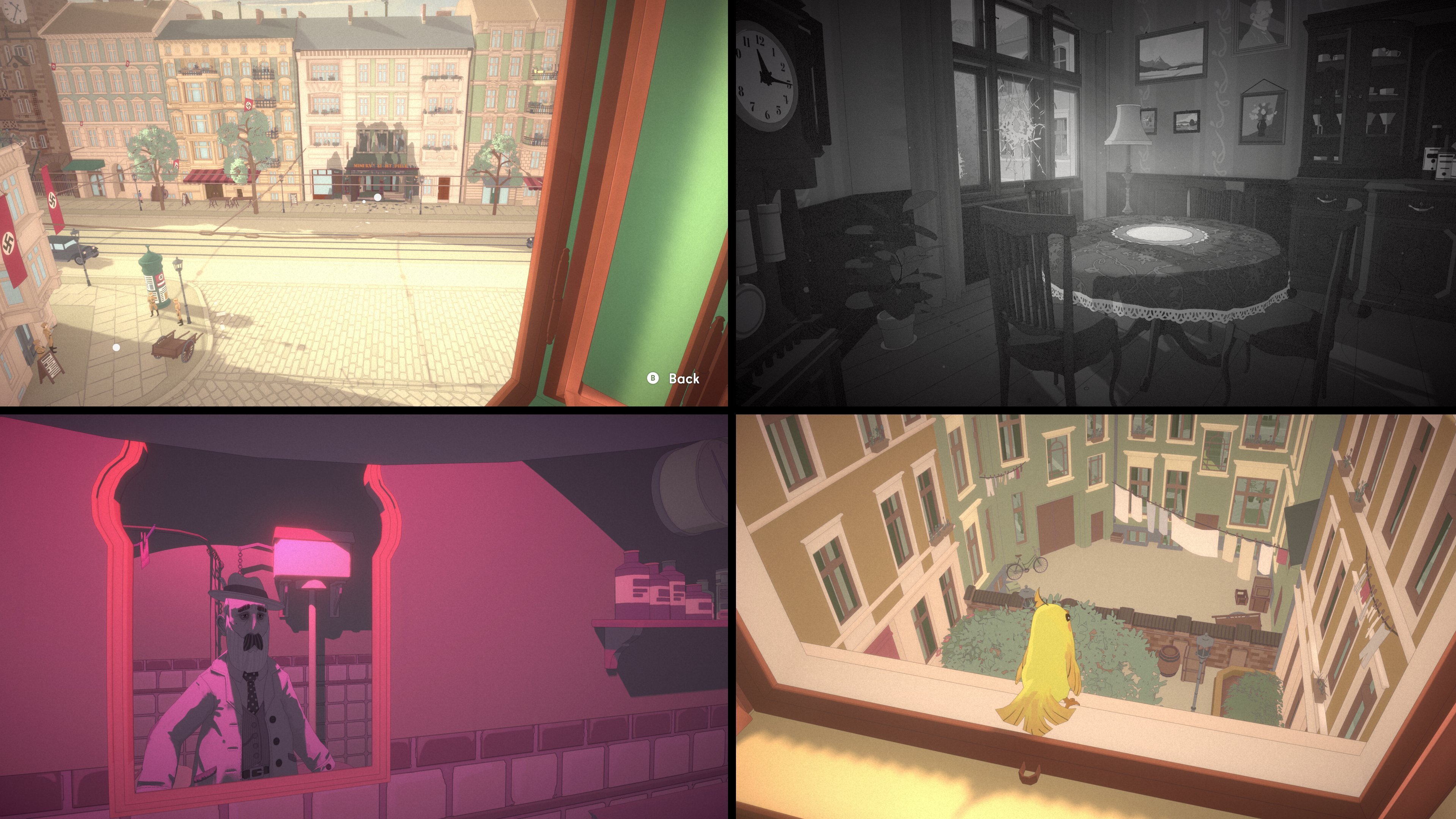
The next chapter features gentle old Joseph, a Jewish cinema owner and projectionist in 1933, right at the frightening start of Nazi rule.

Next up you meet Magda, Lukas & Mathilda in the bleak winter of 1945, as they struggle for food and warmth at Christmas. Magda is understandably as miserable as the weather and playing as daughter Mathilda, you try and make the best of Christmas...
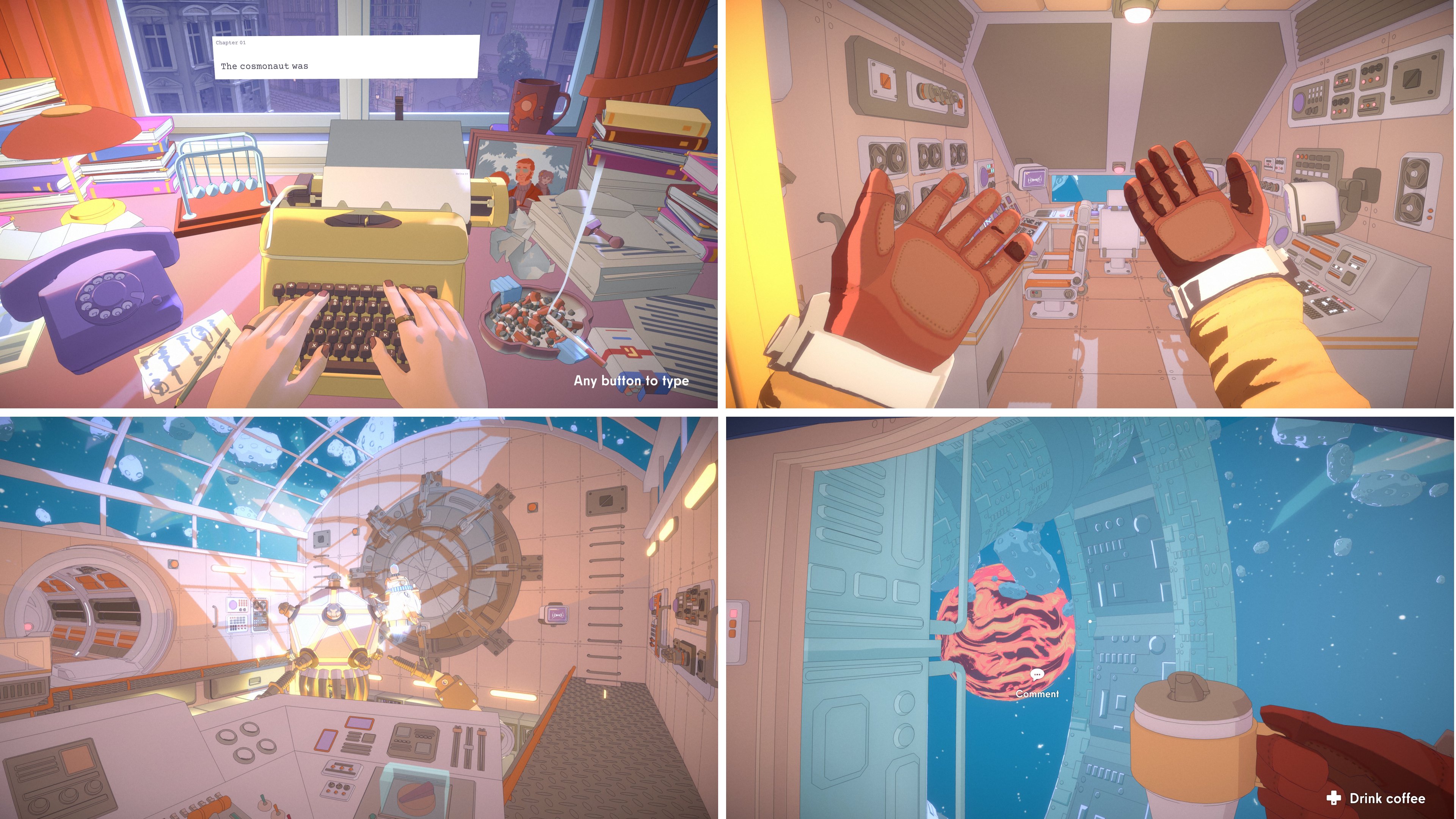
Finally you play as Antonia, an aspiring author in 1967, with the space race and Cold War eras fully underway. She struggles as she tries to complete her sci-fi novel and keep her intrusive publishing authority happy. Antonia dips in and out of her sci-fi world as the story progresses.
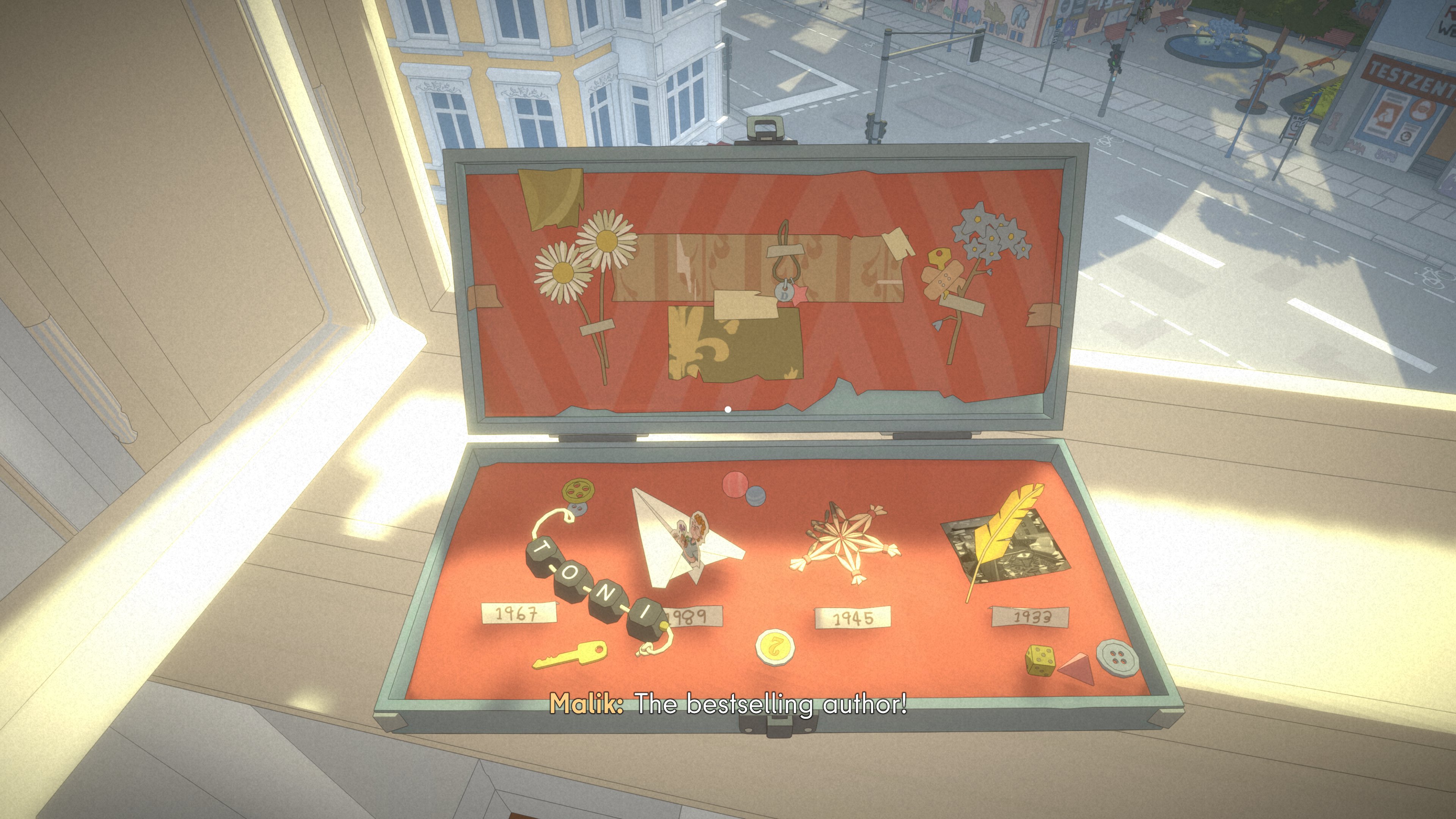
The Berlin Apartment requires no combat, no complex puzzles, no tricky button press sequences, no skill tree or XP: the “progression” comes from uncovering stories, placing objects, and seeing how the apartment (and Berlin) changed over decades.
The game has a contemplative, reflective pace–slow and meditative. It encourages you to observe, listen, and absorb the atmosphere rather than rush through. I have played several games in the past that gave me a similar impression, but The Apartment's strength lies in its mood, history and narrative, viewed through small, human moments rather than grand events. The people changed, the apartment's decor and layout changed, and Berlin changed.
If you enjoy slower, reflective games that focus on story, atmosphere, and memories then The Berlin Apartment offers a touching, thoughtful experience. I felt that some vignettes felt more emotionally impactful and polished than others, and the tone and pacing across episodes varied. It's a relatively short experience–the full play-through lasts only a few hours, which seems rather lightweight for its price of £24.99–but some amusing and easily missable achievements/trophies may well have you returning to hunt them down–and yes, the developers thoughtfully included a chapter select for that!
Many thanks to Blue Backpack and Plan of Attack